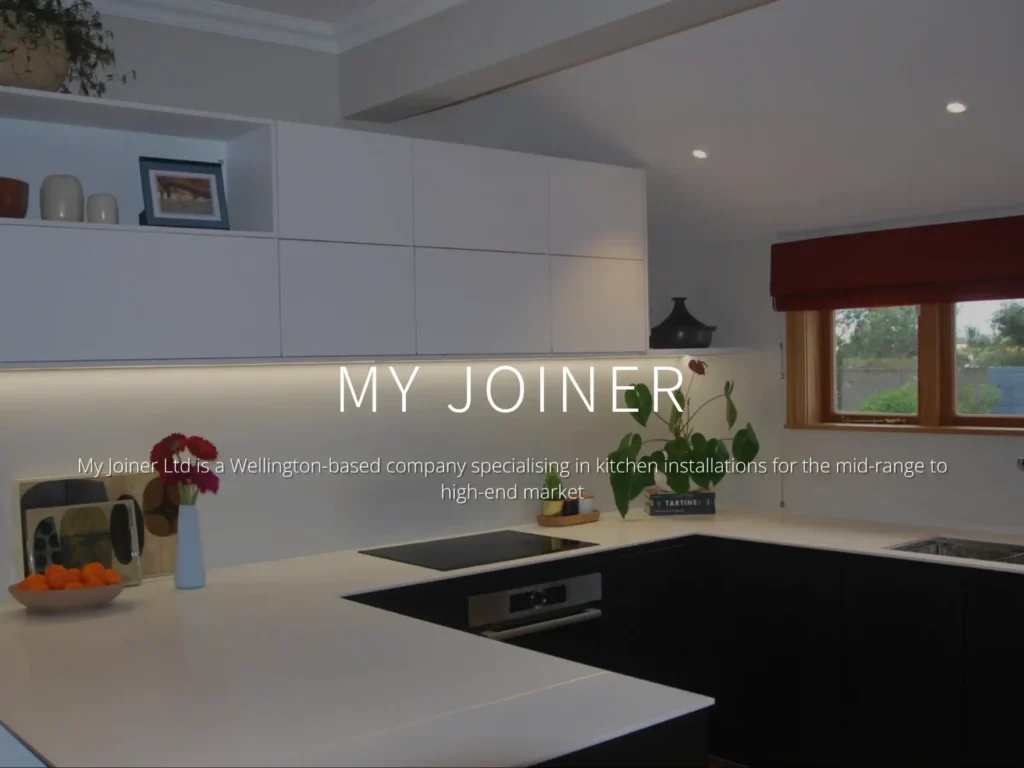
My Joiner Ltd is a Wellington-based company specialising in kitchen installations for the medium to high-end market. Trademaster and kitchen installation specialist Ulli Köhler needed a high-quality, low-maintenance site that showcased his work and would stand for years. We designed and built Ulli a WordPress brochure site with high quality images for strong graphic impact optimised it for SEO, with a custom form for ease of contact.
“Content” is anything on your website that has meaning to your users. The term is too often used in the singular, as if everything on a site’s pages is a single mass, but of course it’s more than that.
In simple terms, “content” comprises:
- Text: Headlines, articles, posts and other written copy.
- Visuals: Graphics and photographs.
- Audio and video: Podcasts and other streaming content.
- Third-party content: Other online assets your organisation uses including social media, blogs and apps.
Each categry of content needs to be treated differently.
What is a website content strategy?
A plan for posts and updates is a roadmap for success
A website content strategy is a schedule for the articles, news posts, images and other material you’re going to publish on your website.
A website content strategy can cover anything from short-term, one-off changes to long-term multi-staged projects. This plan sets your organisation’s content goals and approach and measures that strategy’s success.
A unified approach to images paints a picture
Content strategy for photographs and illustrations is closely aligned with brand strategy. Webstruxure and its partners work with clients to define their visual goals and establish consistent brand aesthetics (i.e. colours, fonts, tone).
Editorial imagery such as featured images for news posts and articles requires creating, sourcing and licensing material from photographic bureaus to create a library your staff can employ long-term.
Webstruxure coordinates with commissioned photographers and illustrators to ensure the clients’ creative vision meets the technical brief.
We also work with clients to ensure their site design and images meet international accessibility standards.
Audio and video production values communicate value
Whether you’re presenting streaming podcasts, conference panel presentations, corporate video or embedded feeds from social sites like TikTok, technical standards for audio and video on your site need to be consistent in order to build trust, increase engagement and establish your brand authority.
Webstruxure delivers the best solution for your business needs, whether it’s hosting on platforms such as YouTube or Vimeo for reach, cost and SEO, or locally hosted files for control, privacy and customisation.
When audio and visual material is required to meet accessibility standards, Webstruxure produces sites with closed captions, audio descriptions and transcripts to ensure inclusivity.
Third-party content adds functionality and credibility
Properly curated third-party content can boost your brand’s credibility, extend your audience and support your site’s messaging or functionality.
A content strategy for third-party material involves curating quality, relevant external content; adding context to explain its value to your audience; and adding proper attribution.
Past examples of Webstruxure’s utilisation of third-party content for client range from simple applications such as automatic newsfeeds to complex data visualisations such as embedded Microsoft Power BI reports.
How users share your content in turn is equally important. As part of our SEO strategy, Webstruxure helps you plan and implement content sharing.
How do I create a website content strategy?
Planning for the plan
- Define goals and target audience.
- Audit existing content and analyse how it meets your goals.
- Schedule and create new content.
- Edit: Review for humans and optimise for SEO.
- Distribute, measure, and refine.
Content planning in the age of AI
Should you use AI to plan and generate content? That’s a great question!
While AI tools are useful for streamlining repetitive tasks such as keyword research and scheduling, ultimately you’re creating a site for people. Your creative and business ideas should be strongly guided by human beings, not algorithms.
Users are quick to spot generic “slop”, filler text and factual inaccuracies that characterise AI-generated content, and reactions to such low-effort content creation are overwhelmingly negative. Don’t be tempted to take the shortcut of having AI plan or write material for you.
Webstruxure takes a human-first approach to websites and content.
We believe that nothing beats traditional planning based on knowing your audience and your business goals. We aim to deliver authentic and “human-first” content for your website and social platforms.
Preparing content for AI
Planning for LLM-based search
In contrast to the backlash against AI-generated content, users are embracing AI search. Features like AI Overviews are core to Google Search. Apps such as ChatGPT and Claude are encouraging users to ask longer, more conversational questions.
AI models have changed how users search for content. To prepare your human-first content for the new technology, focus on creating high-quality, structured, and authoritative information that answers specific user questions directly.
- Make content machine-readable: Use clear headings, bullet points and concise language.
- Build trust: Instil personal expertise, data-backed insights and reputable sources.
- Keep up to date: LLMs are changing search as you’re reading this. Webstruxure can help you keep up with the latest developments.